MIMO antennas extend the easily usable frequencies well beyond the 4.9 GHz band. The FCC took the first step with a Notice of Proposed Rulemaking. Claus Hetting of Wi-Fi Now kindly allowed me to reprint his report.
The FCC wants to introduce four new unlicensed subbands aptly named U-NII-5 to U-NII-8. In the case of U-NII-5 and U-NII-7 (a total of 800 MHz) a new scheme called AFC (‘Automated Frequency Control’) will protect some incumbent 6 GHz users (mostly point-to-point microwave links) from harmful interference, the FCC says. In these two subbands the FCC wants to allow the operation of ‘standard-power access points’ equivalent to current rules for U-NII-1 and U-NII-3 subbands.
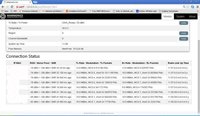 These may be the first customers getting more than 10 megabits reported anywhere. Michael Davies and Richard Yu of 6Harmonics in Ottawa have sent me test data showing customers with a connection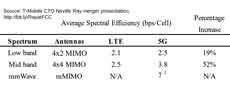
 3.5, 3.7 GHz 1800. 2100. 2300. maybe even 700 can work just like LAA. Qualcomm, Verizon, and AT&T testing convincingly shows that commercial quality broadband can be delivered today over unlicensed spectrum. The telcos are targeting the Wi-Fi bands and possibly 3.5-4.2 GHz.
 FCC Chief Technologist Henning Schulzrine startled the engineers at a high level 5G wireless event by predicting a complete turnaround in spectrum policy and licensing.